




NAOS Ex-50 Opportunities Company Limited advises that its Annual General Meeting (AGM) will be held at 9.00 am (AEDT) on Thursday 12 November 2026 at Beaumont Room, Sheraton Grand Sydney Hyde Park, 161 Elizabeth Street, Sydney NSW 2000.
Further details relating to the AGM will be advised in the Notice of Meeting to be sent to all shareholders and released to the ASX immediately after dispatch.
In accordance with the ASX Listing Rules, valid nominations for the position of Director are required to be lodged at the registered office of the Company no later than 5.00 pm (AEST) on 17 September 2026.
The NAOS Investor Roadshow will be coming
to a city near you this October and November. Join us as the investment team discusses its investment philosophy and process and provides an outlook on the market. We will also highlight a selection of stocks that are held within our Listed Investment Companies (LICs).
We invite you to bring a guest, meet us in person, and learn more about NAOS Asset Management (NAOS) and our LICs. Register today to secure your seat.
InterContinental Perth City Centre
815 Hay Street, Perth WA 6000
10.30 am-12.00 pm
Sofitel Brisbane Central
249 Turbot Street, Brisbane QLD 4000
10.30 am-12.00 pm
Hilton Melbourne Little Queen Street
18 Little Queen Street, Melbourne VIC 3000
10.30 am-12.00 pm
Australian Museum
1 William Street, Sydney NSW 2010
10.30 am-12.00 pm
The Playford Adelaide
120 North Terrace, Adelaide SA 5000
10.30 am-12.00 pm
Visit naos.com.au/events for more information.
NAOS Ex-50 Opportunities Company Limited (ASX: NAC) seeks to provide long-term, concentrated exposure to Australian and New Zealand emerging companies while providing a sustainable stream of dividends franked to the maximum extent possible, and long-term investment performance above the Benchmark Index, being the S&P/ASX 300 Industrials Accumulation Index (XKIAI).
FY26 Dividend
Profits Reserve at 30 June 2026
Directors' Shareholding
Pre-Tax Net Tangible Assets per Share
Post-Tax Net Tangible Assets per Share
FY26 Dividend (cents per share)
Dividend Yield
Share Price
Shares on Issue
Convertible Note Price (ASX: NACGA)
Convertible Notes on Issue
Directors’ Shareholding (number of shares)
Profits Reserve (cents per share)
NAC Investment Portfolio Performance** | S&P/ASX 300 Industrials Accumulation Index | Performance Relative to Benchmark | |
|---|---|---|---|
1 Year | -5.26% | -4.49% | -0.77% |
3 Years (p.a.) | -4.18% | +10.15% | -14.33% |
5 Years (p.a.) | -5.73% | +6.18% | -11.91% |
10 Years (p.a.) | +4.45% | +7.91% | -3.46% |
Inception (p.a.) | +7.00% | +7.52% | -0.52% |
Inception (Total Return) | +119.63% | +132.34% | -12.71% |
* Dividend yield is based on the four most recent dividends declared on or before 30 June 2026, totalling 6.20 cents per share, and is calculated using the closing share price of $0.505 at 30 June 2026.
** Investment Portfolio Performance is post all operating expenses, before fees, taxes, interest, initial IPO commissions and all subsequent capital-raising costs. Performance has not been grossed up for franking credits received by shareholders. Since inception (p.a. and Total Return) includes part performance for the month of November 2014. Returns compounded for periods greater than 12 months.


Sarah Williams was appointed as an Independent Director in January 2019 and was elected Independent Chair on 1 December 2022. Sarah is also the Independent Chair of NAOS Emerging Opportunities Company Limited (ASX: NCC) and an Independent Director of NAOS Small Cap Opportunities Company Limited (ASX: NSC).
Sarah has over 25 years’ experience in executive management, leadership, IT and risk management in the financial services and IT industries. Most recently, Sarah was an executive director at Macquarie Group and head of IT for the group’s asset management, investment banking and leasing businesses. During her 18-year tenure at Macquarie Group, she also led the Risk and Regulatory Change team and the Equities IT team and developed the IT M&A capability. Sarah has also held senior roles with JP Morgan and PricewaterhouseCoopers in London.
Sarah has also been a director of charitable organisations including Cure Cancer Australia Foundation and Make a Mark Australia. Sarah holds a Honours Degree in Engineering Physics from Loughborough University.

Sebastian Evans has been a Director of the Company since its inception. Sebastian is also a Director of NAOS Emerging Opportunities Company Limited (ASX: NCC), NAOS Small Cap Opportunities Company Limited (ASX: NSC), and has held the positions of Chief Investment Officer (CIO) and Managing Director of NAOS Asset Management Limited, the Investment Manager, since 2010.
Sebastian is the CIO across all investment strategies. He holds a Master of Applied Finance (MAppFin) majoring in investment management, as well as a Bachelor of Commerce majoring in finance and international business, a Graduate Diploma in Management from the Australian Graduate School of Management (AGSM) and a Diploma in Financial Services.

David Rickards OAM has been an Independent Director of the Company since its inception. David is also the Independent Chair of NAOS Small Cap Opportunities Company Limited (ASX: NSC). He is also Co-Founder of Social Enterprise Finance Australia Limited (Sefa) and was a director and treasurer of Bush Heritage Australia for nine years.
David has over 25 years of equity market experience, most recently as an executive director at Macquarie Group, where he was head of equities research globally, as well as equity strategy from 1989 until he retired in mid-2013. David was also a consultant for the financial analysis firm Barra International.
David holds a Master of Business Administration majoring in accounting and finance from the University of Queensland. He also has a Bachelor of Engineering (Civil Engineering) and a Bachelor of Engineering (Structural Engineering) from the University of Sydney, and a Bachelor of Science (Pure Mathematics and Geology).

Warwick Evans has been a Director of the Company since its inception. Warwick is also a Director of NAOS Emerging Opportunities Company Limited (ASX: NCC), NAOS Small Cap Opportunities Company Limited (ASX: NSC) and Chair of NAOS Asset Management Limited, the Investment Manager.
Warwick has over 35 years of equity market experience, most notably as Managing Director of Macquarie Equities (globally) from 1991 to 2001, and as an executive director for Macquarie Group. He was founding Chairman and CEO of the Newcastle Stock Exchange (NSX) and was also Chairman of the Australian Stockbrokers Association. Prior to these positions, Warwick was an executive director at County NatWest.
Warwick holds a Bachelor of Commerce majoring in Economics from the University of New South Wales.
The Board has declared a final quarterly dividend of 1.60 cents per share, bringing the FY26 full year dividend to 6.30 cents per share, an increase of 5.0% on the prior year.
Dear fellow shareholders,
On behalf of the Board, welcome to the Annual Report for NAOS Ex-50 Opportunities Company Limited (Company) for the financial year ended 30 June 2026. I would like to thank all shareholders for your continued support and welcome all new shareholders who joined the register during the year.
The Board has declared a final quarterly dividend of 1.60 cents per share, franked to 50%, bringing the total dividend for FY26 to 6.30 cents per share. This represents an increase of 5.0% on the FY25 full year dividend of 6.00 cents per share. FY26 is the twelfth consecutive financial year in which the Company’s annual dividend rate has been maintained or increased. Based on the FY26 dividend of 6.30 cents per share and the closing share price of $0.505 at 30 June 2026, the dividend represents a yield of 12.48%, or 15.58% once the value of the attached franking credits is included.
Since inception, the Company has now declared 63.45 cents per share in dividends, together with 24.85 cents per share in franking credits, being 88.30 cents per share in total. That is more than 1.7 times the closing share price of 50.5 cents at 30 June 2026.
NAC Dividend History
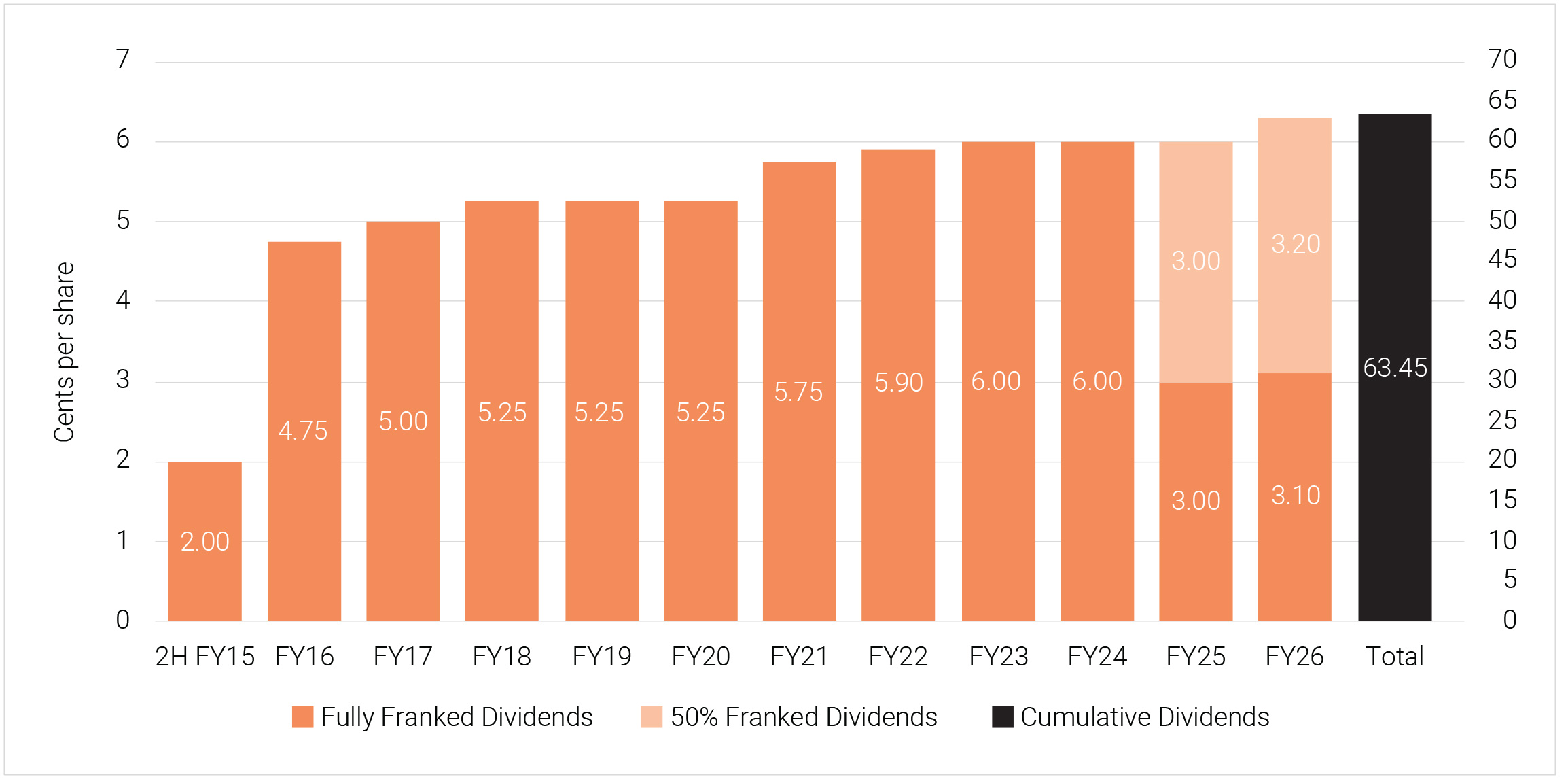
The Company seeks to provide shareholders with a sustainable, growing stream of dividends, franked to the maximum extent possible, while also maintaining an adequate profit reserve balance to enable the Company to pay dividends in periods such as this financial year, where it has been more difficult to generate significant performance. The profit reserve balance at year-end was 52.2 cents per share. Of the FY26 dividends, 3.10 cents per share was fully franked, and the balance was franked to 50%, franking being a function of the tax paid on realised profits and of the franked income received from investee companies.
FY26 proved to be yet another volatile year, driven in large part by significant macro events and the continued tightening of interest rates, with the Reserve Bank of Australia increasing the cash rate by 0.75% over the financial year to 4.35%. The result, from an NAC standpoint, was a significant widening of the gap between how several of the Company’s investee businesses performed operationally and the value attributed to them by the market. The Board believes that gap will close over time, and that this is where significant value can be created for shareholders.
For the financial year ended 30 June 2026, the Company recorded an after-tax loss of $3.09 million (FY25: after-tax profit of $7.55 million). The NAC Investment Portfolio returned -5.26% for the year, compared with the benchmark S&P/ASX 300 Industrials Accumulation Index, which returned -4.49%. Pre-tax net tangible asset backing per share decreased from 67.26 cents to 51.94 cents over the course of the year, as set out in the chart below.
NAC Pre-Tax NTA Performance
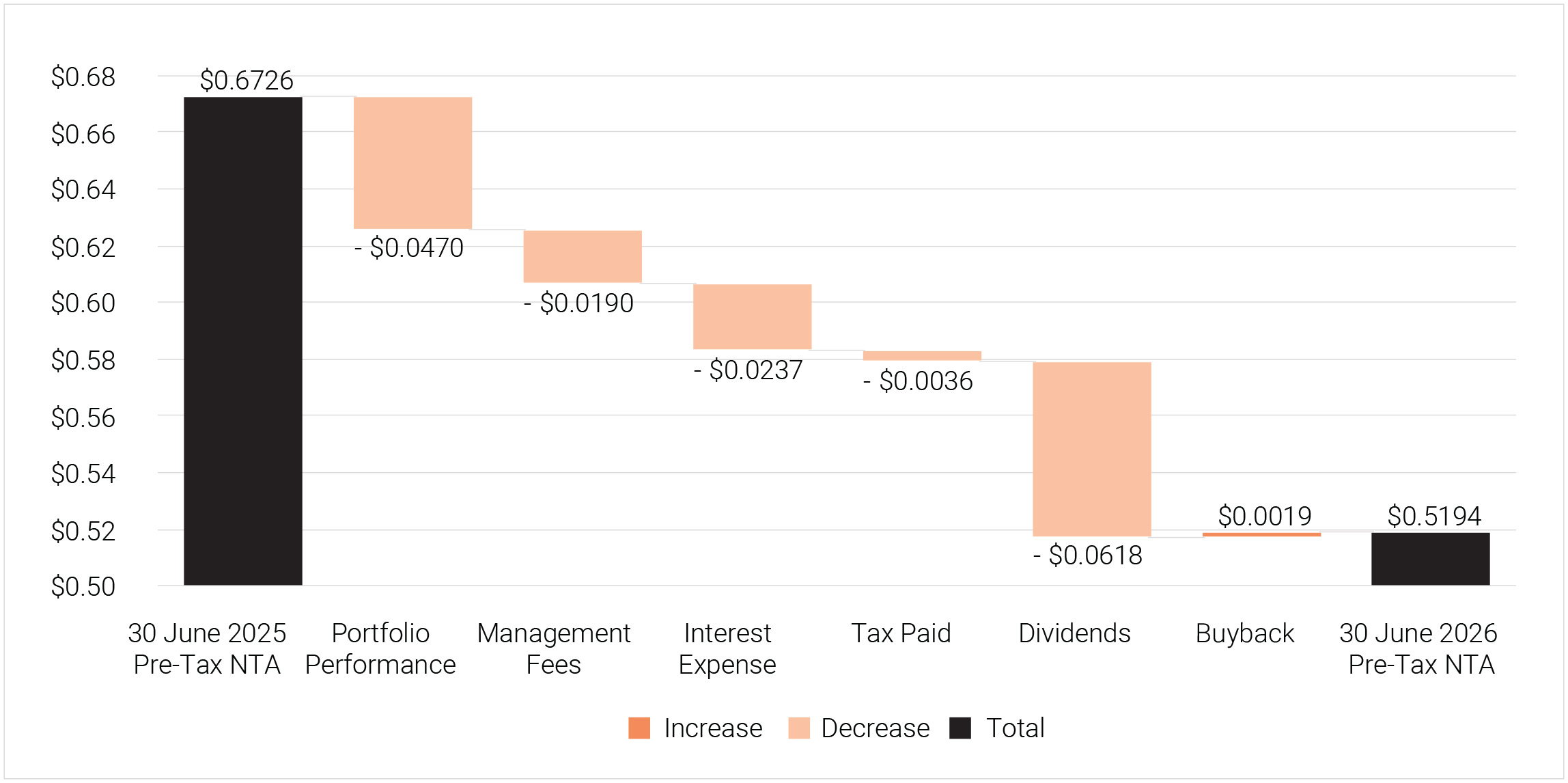
Portfolio return and NTA measure the performance and value of the Company’s underlying investments. Total shareholder return measures the change in the market value of a shareholder’s investment, together with dividends paid over the period. Total shareholder return for the 12-month period was +18.70%, or +21.62% when including the value of franking credits. This was driven by the dividends paid over the year and by a narrowing of the share price discount to pre-tax NTA, from 29.85% at 30 June 2025 to just 2.77% at 30 June 2026.
The Board remains committed to managing the capital base of the Company in a manner that maximises potential shareholder return. The principal capital management activities during the financial year were as follows:
The Board remains strongly aligned with shareholders through their respective shareholdings, which increased by 312,613 shares over the course of the financial year to a cumulative total of 9,607,235 shares, or approximately 21% of the Company.
Since the end of the financial year, it has been pleasing to note that the Investment Portfolio returned +14.60% in July 2026. A detailed view of the Company’s Investment Portfolio is set out in the Investment Manager’s Report on the following pages, which I would encourage all shareholders to read.
On behalf of the Board of Directors, I would like to thank the staff of the Investment Manager for their efforts and dedication over the course of the financial year and again thank you to all shareholders for their continued support.

Sarah Williams
Independent Chair
19 August 2026
Dear fellow shareholders,
For the financial year ended 30 June 2026 (FY26), the NAC Investment Portfolio decreased by -5.26% compared to the Benchmark S&P/ASX 300 Industrials Accumulation Index (XKIAI), which decreased by -4.49%.
Coming off the strong +28.92% return delivered in FY25, FY26 was always likely to be a year of consolidation rather than another step-change. The relatively flat absolute result masks a notable divergence beneath the surface. Several core investments made clear strategic and operational progress - most visibly Urbanise.com Ltd (ASX: UBN), which delivered a positive return following leadership, product, and partnership milestones, and Firmus Grid Ltd (Unlisted), whose successive private capital raises materially increased its carrying valuation.
Conversely, a small number of holdings, in particular MaxiPARTS Ltd (ASX: MXI) and MOVe Logistics Group Ltd (ASX/NZX: MOV), saw their share prices decline meaningfully despite, in our view, broadly intact medium-term operating theses. The net effect was a portfolio that finished the year roughly where it started in absolute terms, yet which we believe is materially more de-risked than it was twelve months ago.
We do not attempt to consistently predict macroeconomic outcomes or time market highs and lows. What we can say is that the gap between the share prices of several core holdings and our assessment of their intrinsic value widened over FY26, even as their underlying operating performance held up or improved. For long-term shareholders, we believe that valuation gap represents a compelling opportunity.
The Year in Markets - Capital, Capex and Concentration
FY26 will be remembered for both the extraordinary concentration of capital at the top end of global equity markets and the geopolitical and macroeconomic noise that has run alongside it. The S&P/ASX 200 Accumulation Index (XJOAI) delivered a +6.11% return. In the US, the S&P 500 Index returned +22.32%, but the dispersion within those headline numbers tells a more meaningful story.
S&P/ASX 200 v S&P 500 (Total Return)
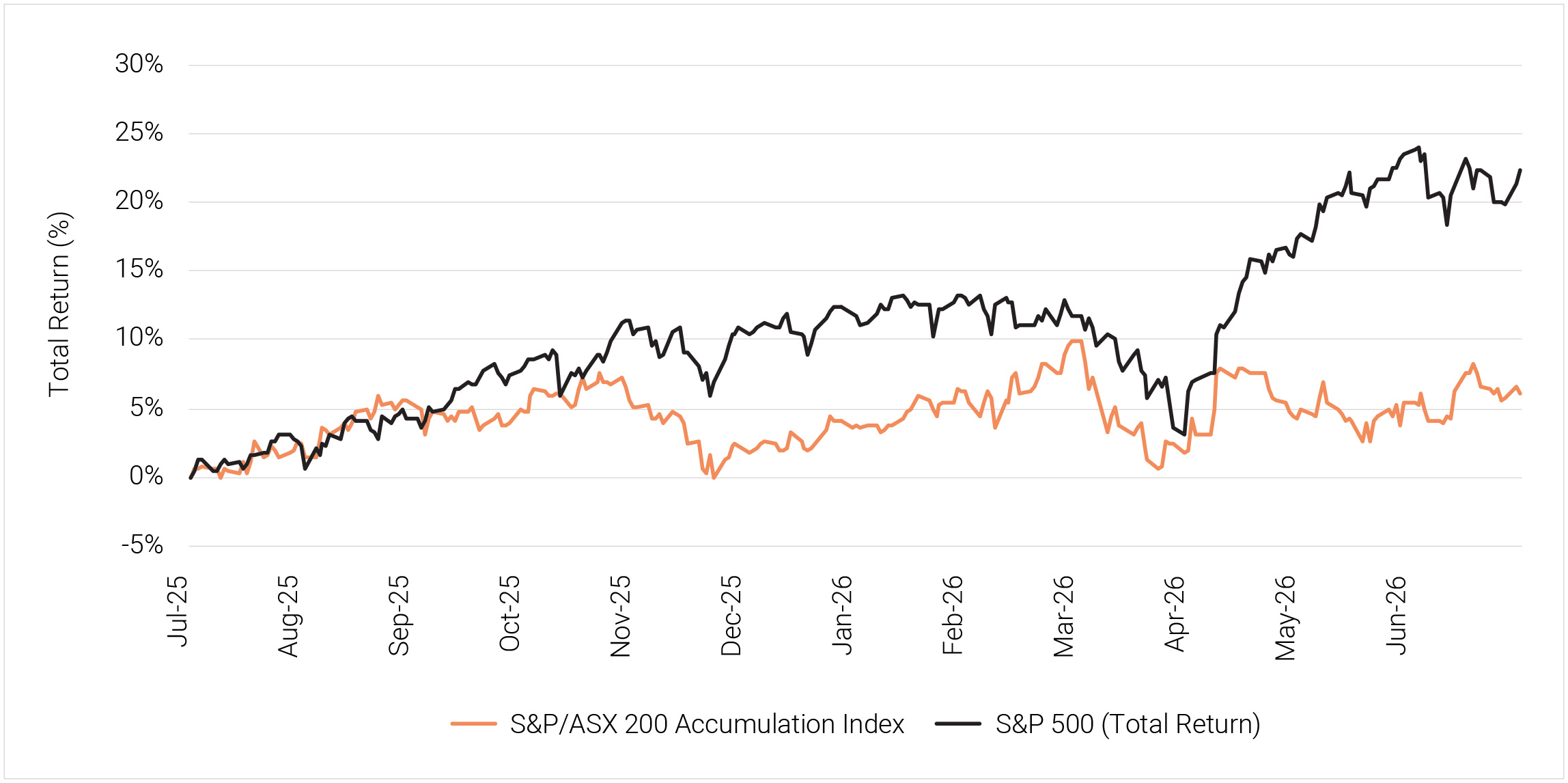
For most of CY25, the so-called ‘Magnificent 7’ companies continued to drive the bulk of US equity returns, with this cohort delivering an average return of ~27.5% versus the S&P 500 Index’s return of ~16%. That dynamic reversed in CY26. Through the first half of CY26, the Magnificent 7 underperformed the broader index, returning +3.7% versus the S&P 500 Index return of +9.9%. By February, as a snapshot, the cohort was down -7% while the equal-weighted S&P 493 was up +4%. This is the first sustained period of underperformance for the Magnificent 7 cohort since 2022 and, in our view, marks an early shift in market breadth that requires close watching.
Underpinning FY26, both domestically and globally, was the AI infrastructure capital expenditure cycle. The five largest US hyperscalers - Alphabet Inc. (NDQ: GOOG), Amazon Inc. (NDQ: AMZN), Microsoft Corp. (NDQ: MSFT), Meta Platforms Inc. (NDQ: META) and Oracle Corp. (NYSE: ORCL) - collectively committed in excess of US$700 billion of capital expenditure in CY26, an increase of ~36% year-on-year, with around 75% of that spend tied directly to AI infrastructure. To put that into perspective, Alphabet Inc. alone spent ~US$45 billion in Q2 CY26, which was 100% higher than the previous corresponding period, with Google Cloud’s reported contracted customer backlog exceeding US$510 billion. The Data Centre division of NVIDIA Corp. (NDQ: NVDA) generated revenue of ~US$75 billion in a single quarter (Q1 CY26), up ~92% year-on-year.
These are numbers without a clear historical analogue. The capital being deployed into AI infrastructure, such as Graphics Processing Units (GPUs), power infrastructure, cooling, networking and the physical real estate that houses it, has, by some measures, exceeded the entire telecommunications buildout of the late 1990s. The relevant question for investors in emerging companies is not whether this capex cycle is happening - clearly, it is - but what the second- and third-order effects look like, and which companies further down the value chain are positioned to benefit without taking on hyperscaler-level capital risk.
The Software De-Rating
Sitting in awkward contrast to the AI infrastructure spend and data centre buildout has been the sharp de-rating of many listed software companies. In our Q3 FY26 Quarterly Investment Report, we referred to this dynamic, often coined the ‘SaaSpocalypse’.
Globally, and on the ASX, several of the most highly regarded software businesses have seen their share prices fall by 50% or more over a 6-12-month period, with notable ASX examples including Xero Ltd (ASX: XRO), Pro Medicus Ltd (ASX: PME), TechnologyOne Ltd (ASX: TNE) and Objective Corp. Ltd (ASX: OCL).
The driver of this de-rating is a genuine question over the long-term durability of software revenue. Will customers continue to pay the same price per seat in five years’ time if a competing AI-native product offers comparable functionality at a fraction of the cost? Will existing customers consume less of the software they already have? Will some customers simply build their own alternatives? These are not abstract questions; they are likely being asked by every CFO undertaking an enterprise software renewal within their existing environment.
In our view, this de-rating will not be felt evenly across the sector. Those with deep integrations into customer workflows, regulatory data, or proprietary network effects appear comparatively well insulated. Those whose primary value proposition is a thin layer on top of a large language model capability are far more exposed. As renowned global software investor Thoma Bravo noted at its annual investor meeting in March, total spend on software applications may actually increase as AI implementation drives efficiency gains, but the distribution of that spend across vendors will look very different from what it is today.
Interest Rates and the Middle East
A year ago, the consensus view was that domestic interest rates would continue their gradual descent through CY26. That view has not aged well. Through FY26, the Reserve Bank of Australia (RBA) increased interest rates by +0.75%, taking the cash rate back to 4.35% at the time of writing. The drivers of this reversal are well documented. Underlying inflation has proven stickier than expected, the labour market remains tight, and the conflict in the Middle East has driven oil and refined fuel prices sharply higher, which is now feeding through to the broader Consumer Price Index (CPI). It can also be strongly argued that interest rate increases no longer have the same desired effect as they did 10-20 years ago, given the demographic shifts in Australian society.
The conflict in the Middle East, which escalated meaningfully in early CY26, remains unresolved at the time of writing. For Australian businesses, the practical impact has been twofold:
From our perspective, the more worrying variable is that we believe many second- and third-order effects are only now starting to make their way through supply chains. Examples include the inputs required to make many food-packaging items, the glues used in manufacturing processes such as plywood, and more nuanced pure-oil products. A good outcome, in our view, would be one where the impact is contained to price rises; a more realistic scenario is supply disruptions and volume curtailments that persist for a considerable period.
Commodity Price Movements - 6 Months
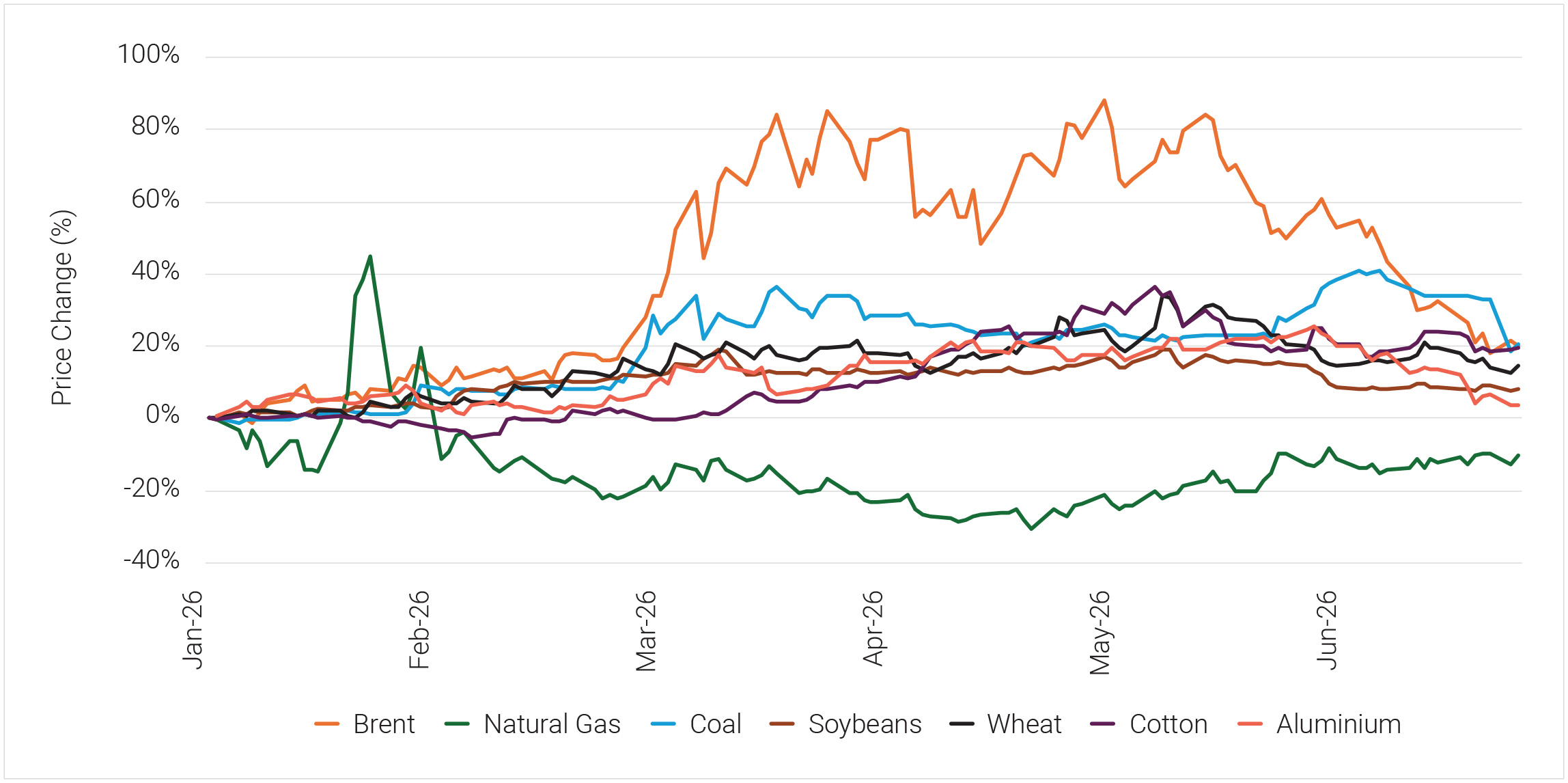
As we regularly emphasise, we do not claim any ability to consistently pick market highs and lows. However, the practical implications of the above for the businesses we own are reasonably clear. Discretionary consumer activity is softer than it was 6 to 12 months ago. Construction-related demand has continued to recover from cyclical lows, but more slowly than we had hoped. Defence-related spending continues to expand, both in Australia and globally, as governments respond to a more volatile geopolitical environment. The cost of debt remains higher than what businesses had been expecting 12 months ago, which has renewed the focus on capital efficiency and cash generation.
The Australian Knock-On - Data Centres, Contractors and Defence
The most consequential domestic development of FY26 has, in our view, been the way in which the global AI capex cycle has begun to translate into demand for physical infrastructure on Australian shores. Australia is now firmly on the global hyperscaler map as a build location, with the most visible commitment being both Amazon Inc.’s ~AU$20 billion data centre investment announced in mid-2025 and Microsoft Corp.’s AU$25 billion expansion investment announced in April 2026.
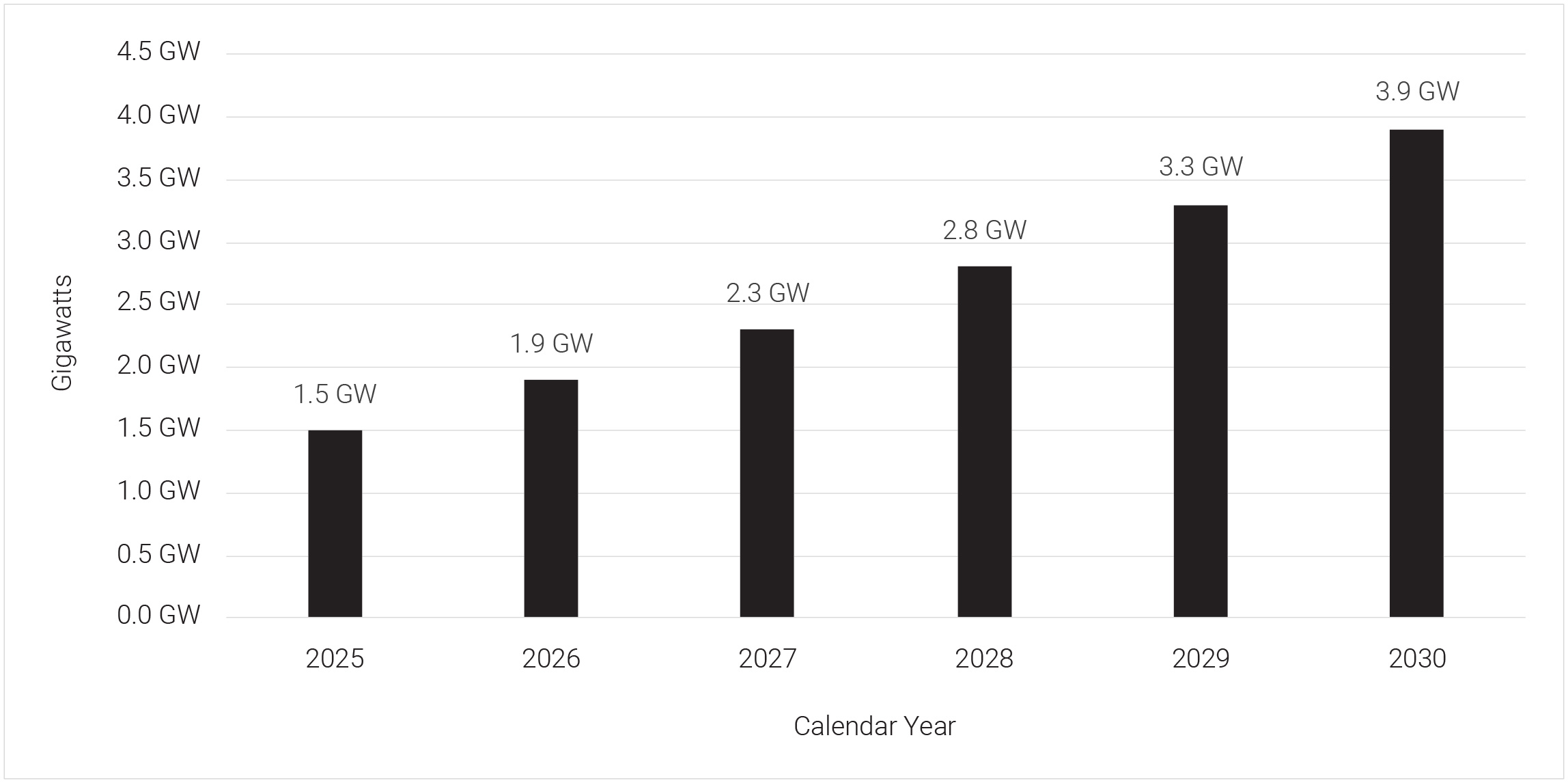
On a national basis, Australia’s deployable data centre capacity is expected to more than double from ~1.5 GW in 2025 to in excess of 3.9 GW by 2030, requiring an estimated AU$26 billion in new build. To put that in perspective, this is the kind of structural construction pipeline that the domestic resources sector last enjoyed during the LNG construction boom of the early 2010s. Equally potent is the fact that, despite this projected buildout, demand will still outstrip supply.
Forecasted Gigawatts (GW) of Data Centre Demand in Australia
Layered on top of this is a marked uplift in federal government Defence spending, with successive commitments to expand the Department of Defence’s facilities footprint to support advanced aircraft, drones, submarines and related capability. Both the Data Centre theme and the Defence spending theme are highly capital-intensive, have multi-year durations, and ultimately require much of the same skill base: electrical engineering, civil works, mechanical fit-out, communications cabling, and high-voltage power infrastructure. For the specialist Australian contractors that can credibly self-perform across these disciplines, demand for their services appears the strongest it has been in well over a decade.
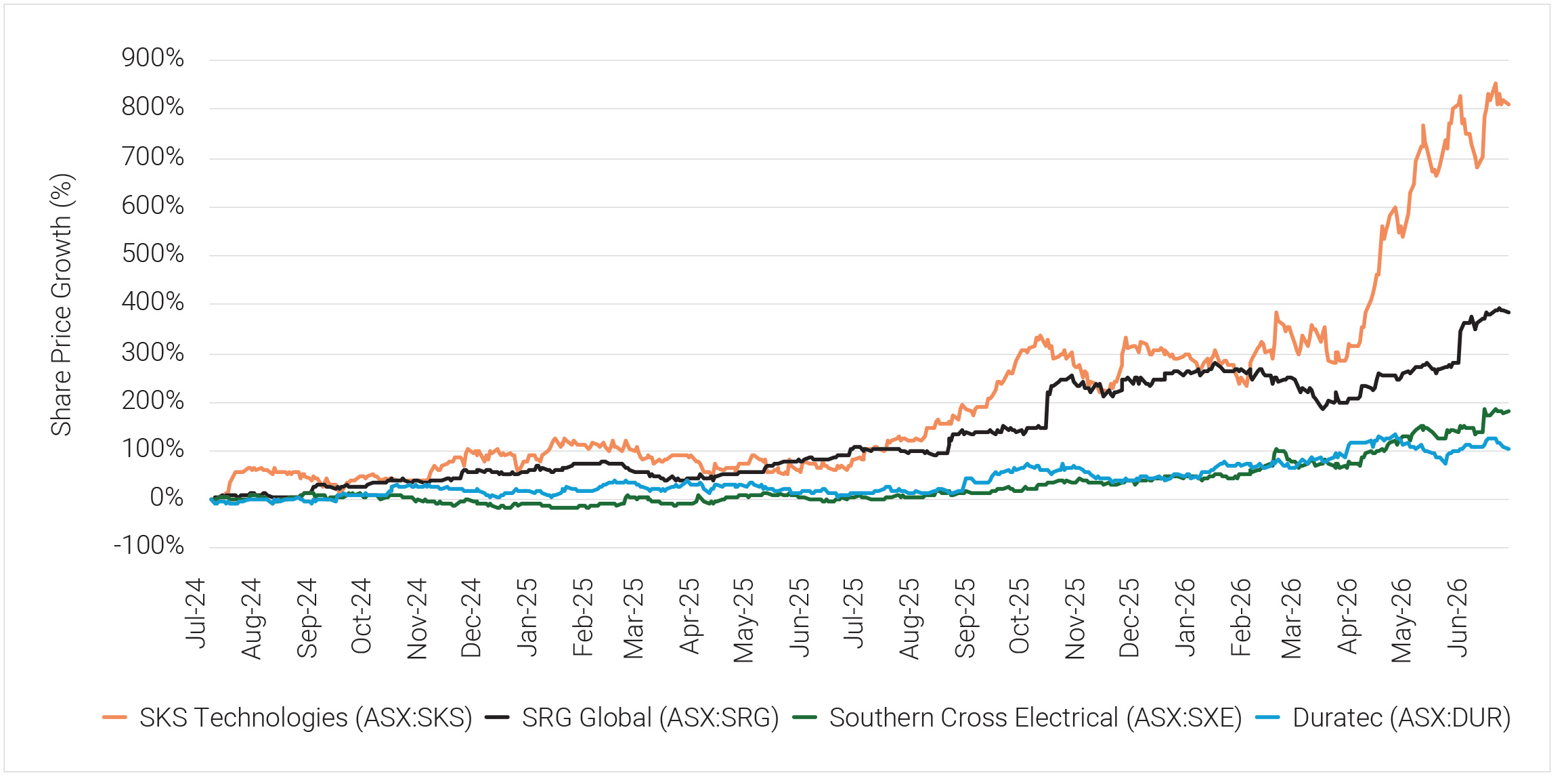
The market has noticed. Over the past 12-18 months, the share prices of contracting and engineering services businesses, including SKS Technologies Group Ltd (ASX: SKS), SRG Global Ltd (ASX: SRG), Southern Cross Electrical Engineering Ltd (ASX: SXE) and Duratec Ltd (ASX: DUR) have re-rated materially, in several cases more than doubling. The earnings underpinning these moves are real. Order books across the cohort have grown significantly, the project mix has shifted to higher-margin work, and pricing power has improved as bid lists have shortened.
Contractors & Engineering Firms - Share Price Growth (%)
Contractors & Engineering Firms - P/E Multiple Growth
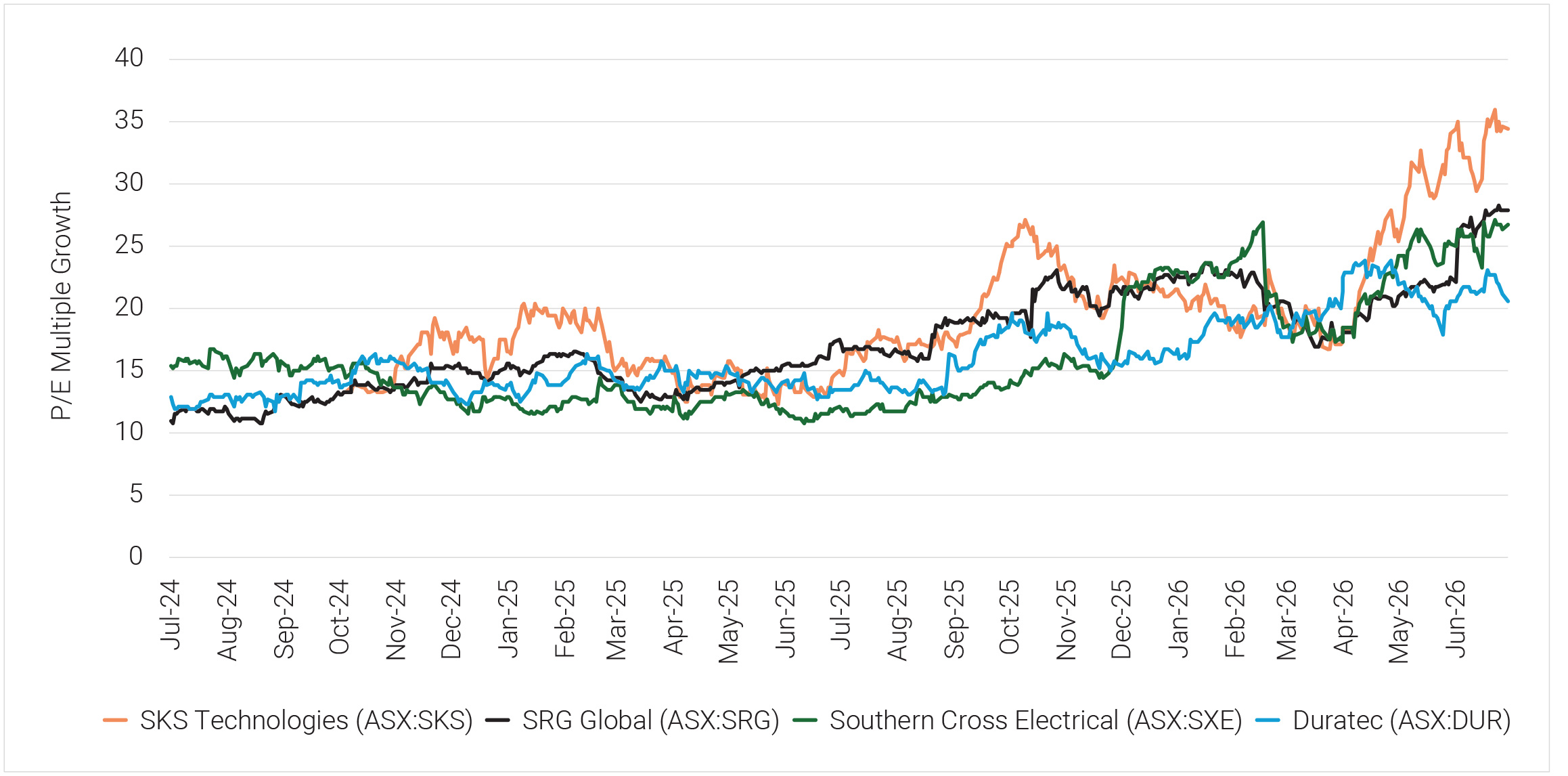
It is worth noting, however, that the valuations applied to many of these businesses are now well above their long-term historical averages. For a sector that has historically traded on single-digit to low-teens forward earnings multiples through the cycle, in our view, the bar for continued share price appreciation from here is materially higher than it was 12 or 24 months ago. However, it is also a reminder that the easiest returns from this thematic have likely already been made. It is also important to weigh the longevity of these earnings profiles against the multiples at which they are being capitalised.
Pulling the Threads Together
In summary, we believe FY26 has been defined by four interrelated forces:
Against this backdrop, the Australian market has continued to disproportionately reward scale and passive index membership, while leaving a significant cohort of high-quality smaller businesses trading at, in our view, materially attractive valuations relative to their underlying long-term value. Despite this, the issue remains: what is the catalyst to close this disparity between perceived fair value and current value for the abovementioned cohort?
NAOS Philosophy
At NAOS, we will continue to focus on what we can control. Our investment philosophy centres on investing in emerging companies that deliver high returns on invested capital and are led by experienced, aligned management teams.
These companies operate in industries poised for sustained revenue growth, where they hold clear competitive advantages, and their business models are transparent to investors. Notably, the majority of the NAC Investment Portfolio is outside the ASX indices, which translates into our investments diverging significantly from the benchmark, the S&P/ASX 300 Industrials Accumulation Index.
Below, I have expanded on three core investments within the NAC Investment Portfolio that saw notable events in FY26, outlining, in each case, what we believe these developments may lead to in the years ahead.
Urbanise.com Ltd (ASX: UBN) - Executive Leadership, the NAB Partnership and an AI Roadmap
Urbanise.com Ltd (ASX: UBN) has been a holding of the NAC Investment Portfolio for over five years and remains one of our highest-conviction core positions. Our investment thesis centres on UBN’s cloud-based strata management software, its strong market positioning, and the significant growth opportunity in an industry still dominated by legacy, on-premises systems.
By way of background, prior to our investment in UBN, the business had gone through multiple iterations and, like many ASX-listed companies, suffered from earlier misguided strategic decisions. This resulted in accumulated losses exceeding AU$100 million. A pivotal turning point was the appointment of Darc Rasmussen, initially as Non-Executive Director and subsequently as Chairman (and most recently Executive Chairman), together with a refreshed Board. These changes brought sharper strategic focus and a renewed commitment to the core strata management platform.
That discipline delivered a major milestone in May 2025 with the partnership announced with National Australia Bank Ltd (ASX: NAB). Under the agreement, NAB acquired an initial 15% stake (with an option to increase to 19.99%) and the two parties agreed to co-develop a data and payments integration service tailored for strata managers and their clients.
In our view, the strategic logic is compelling. Australia has ~2.15 million strata-titled properties, with an estimated AU$10-15 billion sitting in related bank accounts. A platform positioned at the centre of these payments and data flows represents infrastructure with high barriers to entry, strong network effects, and significant long-term monetisation potential.
FY26 was the year UBN converted this strategic positioning into tangible progress. On 25 May 2026, UBN launched Urbanise Artificial Intelligence at the Strata Community Association Australasia Conference in Adelaide. The first release - an AI Assistant embedded within the Urbanise Strata platform - enables strata managers to obtain plain-language answers to operational queries in seconds. This is the initial step in a broader AI roadmap, with further capabilities expected to become commercially available in the near future.
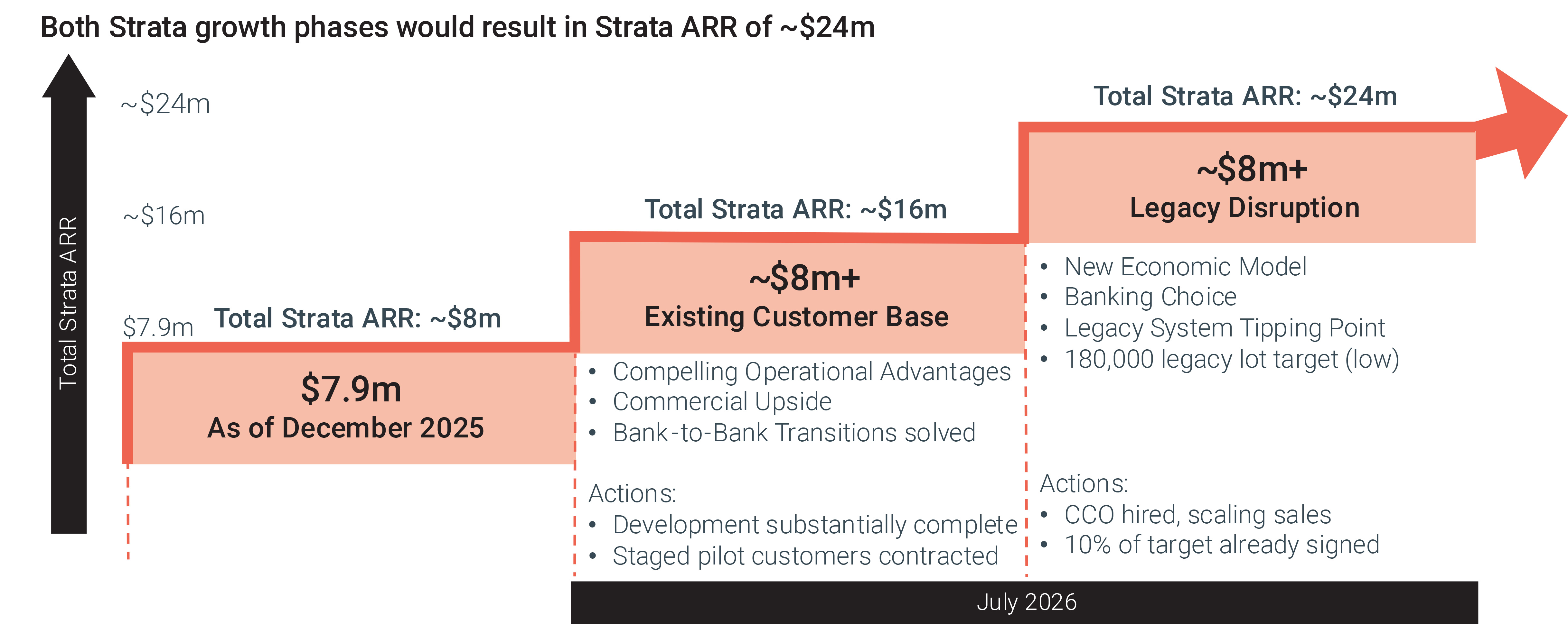
Work also progressed on the NAB payments portal, with the launch scheduled for mid-FY27, and ~10% of UBN’s current strata customer base has already signed up to transition.
ARR Expansion on Existing Customer Base & Legacy Disruption
It is worth highlighting the AI roadmap in the context of the broader ‘SaaSpocalypse’ discussed earlier in this letter. While many software companies face legitimate questions over whether AI will erode their pricing power, we believe UBN sits firmly on the other side of that ledger.
The UBN software is deeply embedded in the daily workflows of strata managers; it will be increasingly intertwined with a major bank’s payments and data infrastructure, and the AI Assistant is additive to - rather than a substitute for - the underlying platform. This is precisely the kind of workflow-embedded, network-effect software that leading US software-focused private equity firm Thoma Bravo would describe as well-insulated.
AI Disruption Risk is Not Uniform Across Software
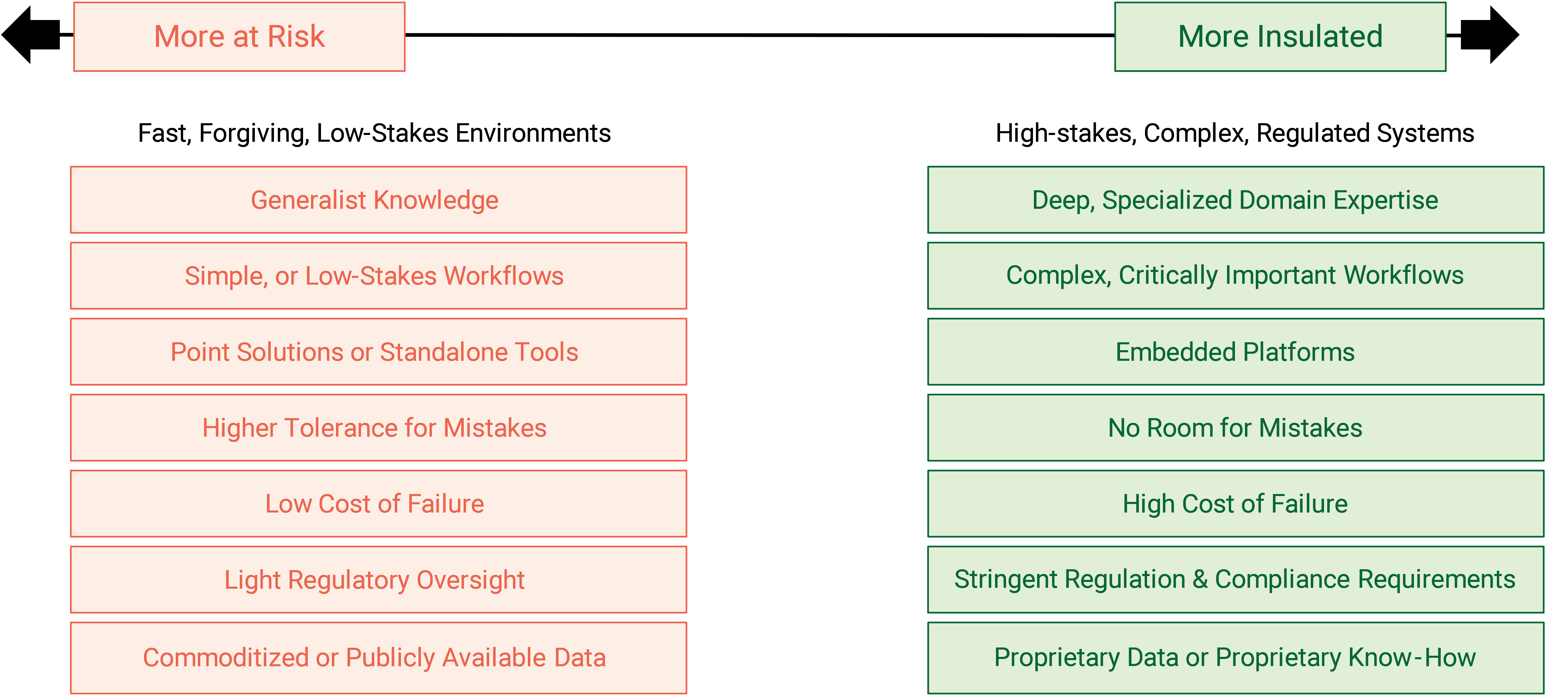
The medium-term opportunity for UBN, as we see it, sits across three vectors:
Execution on these pillars will take time, but early momentum is clearly building. The question for UBN, in our view, is no longer whether it has the strategic positioning to win in its market - that question has now been answered - it is now a question of how well UBN can execute and monetise the abovementioned strategy over the coming three to five years. If successful, we believe UBN has the potential to evolve into a high-margin business with annual recurring revenue (ARR) exceeding AU$24 million.
MOVe Logistics Group Ltd (ASX/NZX: MOV) - The Path Back to Profitability
MOVe Logistics Group Ltd (ASX/NZX: MOV) is a New Zealand-based logistics operator that has been one of the more challenging investee companies within the NAC Investment Portfolio. In FY26, in our view, the MOV share price materially detached from the underlying operating trajectory of the business. We include MOV in this letter precisely because we believe the gap between price and progress is now at its widest.
Our investment thesis on MOV rests on a turnaround from a loss-making, sub-scale cost base toward a right-sized, profitable national logistics network, leveraged to an eventual recovery in the New Zealand economy. Through FY26, that operational turnaround has steadily progressed. The company’s normalised earnings before tax (EBT) loss in Q1 FY26 had narrowed by 68% year-on-year, and management reaffirmed guidance to return to profitability for the full FY26 year. Pleasingly, this was confirmed during July with the company announcing it had achieved its target of positive normalised EBT for FY26. The 1H FY26 results extended that improvement, with all business lines other than Warehousing delivering planned operational gains.
MOVe Logistics NPAT ($m)
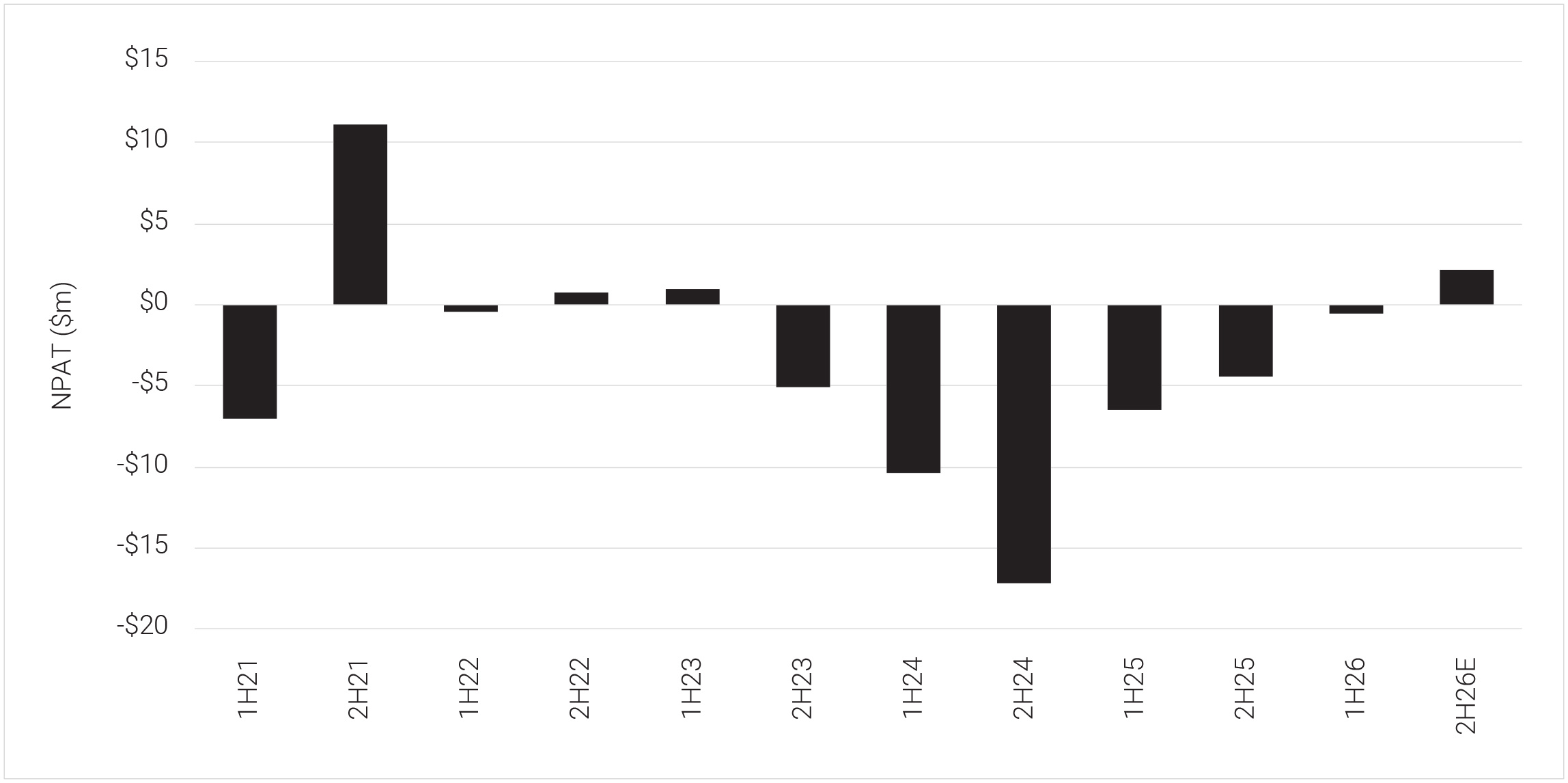
The Warehousing division remains the principal area of underperformance given some of the sub-optimal leases signed by previous management teams. The current management team has flagged a small level of new business wins, ongoing productivity improvements, and the planned exit of two onerous property leases as the key contributors to improving the cost base from late FY26 into FY27. We will be monitoring the resolution of these leases and the Warehousing division’s trajectory closely, as it represents the key swing factor for MOV achieving sustainable profitability.
The investment case from here, in our view, is a combination of self-help and cyclical leverage. On the self-help front, MOV has been right-sized, the cost base reset, and the customer base broadly retained - the operational gains are largely within management’s control. On the cyclical side, the New Zealand economic backdrop, while still soft, has begun to show early signs of stabilisation, with declining interest rates and improving consumer confidence. MOV’s national network, cost base reset and strong customer partnerships leave it well-placed to benefit operationally as economic activity improves through 2H CY26 and into CY27.
We will be the first to acknowledge that the share price action over FY26 has been disappointing, particularly given the underlying operational progress. The combination of low trading liquidity (MOV is primarily traded on the NZX) and a constrained risk appetite for small-cap logistics businesses has, in our view, weighed on the share price well beyond what the underlying earnings trajectory would warrant.
For a turnaround of this nature, the next 12 to 18 months will be critical. Success will depend not only on achieving profitability (which they have now done) but also on demonstrating that those profits are durable and scalable as volumes recover. Looking ahead, we expect management’s focus to shift toward delivering sustainable 3–5% net profit after tax (NPAT) margins. We believe this is an achievable target, given the significant operating leverage in the business as it scales from a low base amid a gradually improving New Zealand economy.
Firmus Grid Ltd (Unlisted) - Funding, Scale and a Pending IPO
Firmus Grid Ltd (Unlisted) is, in many respects, the most strategically distinctive asset within the NAC Investment Portfolio: a private holding with direct exposure to the AI infrastructure capex cycle described earlier in this letter. This is currently anchored by Tasmania’s hydroelectric power advantages and partnerships with NVIDIA and CDC Data Centres (part-owned by listed infrastructure company Infratil Ltd (ASX/NZX: IFT)).
FY26 was a transformational year for Firmus. The funding and customer pathways required to execute its ambitions have, in our view, been substantially de-risked.
By way of refresher, Firmus provides the compute capacity and operational expertise required for large language models (LLMs) to be trained, and, over time, the compute capacity to operate (i.e., consume) these same LLMs at scale. These two tasks are called training and inference, and they have significantly different operational and physical requirements compared to a traditional cloud data centre.
The headline event was a US$505 million capital raise completed in April 2026, led by leading US investment firm Coatue Management L.L.C., at a post-money valuation of ~US$5.5 billion. This brings total capital raised since September 2025 to ~US$1.35 billion (including the round in which NAOS participated). This excludes the US$2 billion July 2026 capital raising for existing shareholders.
Critically, this equity funding has been complemented by the foundations of a genuine operating business: a US$10 billion asset-backed debt financing facility led by Blackstone, a customer contract with NVIDIA Corp. (NDQ: NVDA), and ~AU$600 million in annual revenue from a hyperscaler contract. Taken together, these elements address the three risks that most commonly derail capital-intensive infrastructure projects - equity funding, project financing, and demand. This materially de-risks the Project Southgate buildout.
Looking ahead, the Firmus team has multiple workstreams underway, supported by extraordinary global demand for AI compute. Sound operational execution and project delivery will be critical. Key near-term milestones include the first GPU deployments at the CDC Data Centres site in Melbourne (an Australian first for Firmus), near-term practical completion of Project Southgate in Launceston, Tasmania, and continued progress on further customer commitments, completion of the July 2026 funding round and the well-documented potential IPO.
Outlook for FY27
At our national roadshows last year, we were deliberately cautious on the FY26 outlook. After the strong +28.92% return in FY25, we highlighted that the NAC Investment Portfolio was likely to enter a period of consolidation while the catalysts underpinning our core holdings played out. That framing proved broadly accurate.
While the NAC Investment Portfolio finished marginally behind the benchmark, the meaningful de-risking and operational progress achieved across our holdings leave us entering FY27 with our conviction intact.
We continue to believe that significant latent value remains across the majority of the NAC Investment Portfolio. Importantly, many of the catalysts required to unlock this value are expected to crystallise over the next 12-18 months.
From a portfolio construction perspective, we remain focused on improving balance - increasing the number of holdings, diversifying across industries, and achieving a more even weighting profile. This should reduce the opportunity cost that can arise when a concentrated, top-heavy portfolio encounters timing delays in individual investment theses being recognised by the market.
From a notable catalyst perspective, we have listed below several catalysts we expect to occur in FY27 and that have the potential to drive a step change in the valuation of the respective businesses:
Urbanise.com Ltd (ASX: UBN)
MOVe Logistics Group Ltd (ASX/NZX: MOV)
Firmus Grid Ltd (Unlisted)
MaxiPARTS Ltd (ASX: MXI)
As was the case in FY26, not all the above catalysts will necessarily materialise, and we may encounter unexpected setbacks. Even so, we believe a meaningful number of these items have the potential to both grow the earnings base of the respective businesses and, just as importantly, increase investor awareness and confidence, which is fundamental to any material valuation re-rating.
In closing, I would like to acknowledge all our longstanding shareholders and welcome those who joined the register throughout FY26.
The entire NAOS team and I sincerely thank you for your unwavering support, particularly during periods of performance volatility. We remain steadfastly committed to delivering sustainable, positive returns for all NAC shareholders.
I have continued to acquire NAC shares throughout FY26 and continue to hold no shares outside the NAOS LICs, and will continue to do so for as long as we believe significant value creation can occur across each of the NAOS LICs.
Thank you again for your continued support.
Kind regards,

Sebastian Evans
Managing Director and Chief Investment Officer
NAOS Asset Management Limited


Perth-based manufacturer of equipment and chemicals used to prepare samples for analytical testing and quality control. Facilities in Australia, Europe and Canada, plus global distributors; products are distributed globally and used by miners, construction companies and commercial analytical laboratories.
xrfscientific.com

Australia-headquartered cloud-based software business providing solutions for the strata management and facilities management industries across Asia-Pacific and the Middle East. The Urbanise Strata Platform is a market-leading accounting and administration software system used by strata managers across ~617,000 individual strata lots. The Urbanise Facilities Management Platform aids the maintenance of property assets and supervision of contractors across sectors including aged care, retail, commercial and essential infrastructure.
urbanise.com

Builds world-class, highly efficient AI factories, utilising proprietary technology to drive down total cost of ownership and accelerate AI adoption. Offices in Australia and Singapore; partners with government, enterprise, education and innovators on sustainable, sovereign AI solutions.
firmus.co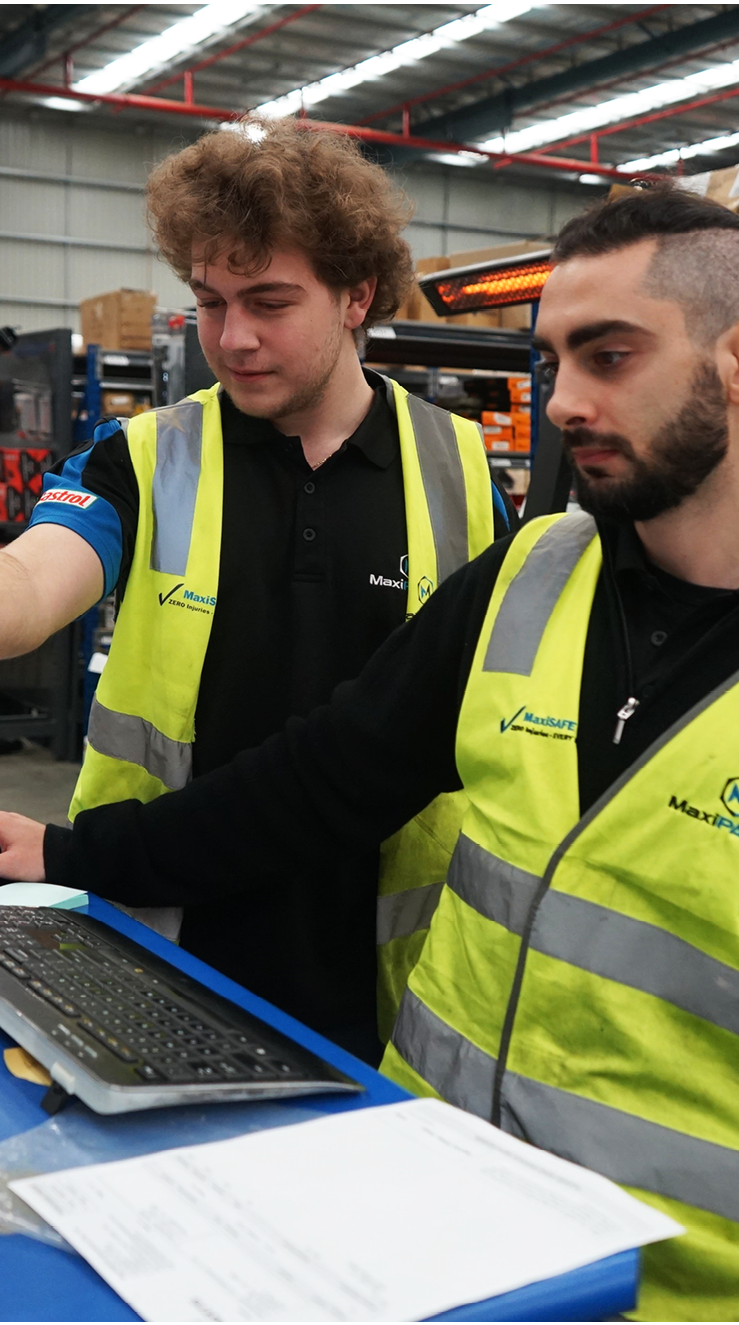

Supplier of commercial truck and trailer aftermarket parts to the road transportation industry. Over 30 years in operation, one of the largest operators in Australia with a unified support and distribution network providing over 162,000 different parts across 30 sites nationwide.
maxipartslimited.com.au

One of the largest freight and logistics providers in New Zealand, with origins dating back to 1869. Team of 750-plus experts providing end-to-end supply chain services to more than 3,500 customers across 40 branches spanning the two main islands of New Zealand.
movelogistics.comNAOS Asset Management is a specialist fund manager that provides genuine, concentrated exposure to quality private and public emerging companies.
NAOS takes a concentrated and long-term approach to investing and aims to work collaboratively with businesses rather than be a passive shareholder. NAOS seeks to invest in businesses with established moats and significant exposure to structural industry tailwinds, which are run by proven, aligned and transparent management teams who have a clear understanding of how to compound capital.
We aim to make significant investments in businesses and, on occasion, seek board representation or appoint highly regarded independent directors. Importantly, NAOS, its Directors and staff are significant shareholders in the NAOS LICs, ensuring strong alignment with all shareholders.
NAOS launched its first LIC in 2013 with 400 shareholders. Today, NAOS manages three LIC vehicles and wholesale funds for approximately 5,500 shareholders.
.png)
At NAOS, our values guide real decisions, not just good intentions - they're the standard we hold ourselves to every day. The nine principles below shape how we invest, how we communicate with our shareholders, and how we treat one another as a team.
Encourage Independent Thinking
Rather than follow the crowd, we prefer to pave the way with innovation and provide a better outcome for our stakeholders. We have a disciplined investment process and avoid getting caught up in the hype and noise of the market.
Do One Thing And Do It Really, Really Well
At NAOS, we focus on providing concentrated exposure to quality public and private emerging companies, and we strive to be the best at this.
Tell It Like It Is
At NAOS, we are committed to honesty and transparency. We continue to exist due to the earned trust of our shareholders.
Have The Right People In The Right Environment
Each NAOS employee has been specifically chosen for their unique ability, proven experience and willingness to learn. At NAOS, we have created an inclusive work culture that supports all our employees.
Be Invested And Aligned
As NAOS Directors and employees, we have a significant interest in NAOS’ investment strategies. This means we are invested alongside our shareholders, creating a strong alignment of interests.
Have A Long-Term Perspective
We believe in investing in businesses where today’s earnings do not accurately reflect what the same business may earn over the longer term. Prior to investing in a business, we ask ourselves: Do we want to own this business forever?
Act Responsibly
We are responsible for investing the funds of our fellow shareholders, and we take this responsibility seriously. At NAOS, we strive to act responsibly and diligently in all matters, from our investment choices to our shareholder communications.
Be An Owner
NAOS employees strive to make NAOS a success by taking ownership of their tasks and responsibilities. In addition, NAOS Asset Management Limited is majority-owned by its employees and Directors.
Make A Positive Impact
Positive impact isn’t something we do alongside our investment business; it’s built into how NAOS is structured as a company. As a Certified B Corporation, we hold ourselves to independently verified standards across how we treat our people, engage our community, and manage our environmental impact.

NAOS’ investment approach is guided by a consistent set of beliefs: a long-term perspective and a disciplined focus on our circle of competence. Rather than chasing every opportunity, we concentrate on businesses we understand and are willing to hold for years, not months. The following pages outline the core beliefs that shape how we invest on behalf of our shareholders.
Value With Long-Term Growth
We believe in investing in businesses where the earnings today are not a fair reflection of what the same business will earn over the longer term. Ultimately, this earnings growth can be driven by many factors, including revenue growth, margin growth, cost cutting, acquisitions and even share buybacks. The result is earnings growth over a long-term investment horizon, even if the business was perceived to be a value-type business at the time of the initial investment.
Quality Over Quantity
Excessive diversification, or holding too many investments, may be detrimental to overall portfolio performance. We believe it is better to approach each investment decision with conviction. In our view, to balance risk and performance most favourably, the ideal number of quality companies in each portfolio would generally be zero to 20.
Invest For The Long Term
As investors who are willing to maintain perspective by taking a patient and disciplined approach, we believe we will be rewarded over the long term. If our investment thesis holds true, we persist. Many of our core investments have been held for three or more years, where management execution has been consistent and the value proposition is still apparent.
Management Alignment
We believe in backing people who are proven and aligned with their shareholders. One of the most fundamental factors consistent across the majority of company success stories in our investment universe is a high-quality, proven management team with ‘skin in the game’. NAOS Directors and employees are significant holders of shares on issue across our strategies, so the interests of our shareholders are well aligned with our own.
Ignore The Index
This means we are not forced holders of stocks with large index weightings that we are not convinced are attractive investment propositions. We actively manage each investment to ensure the best outcome for our shareholders and only invest in companies that we believe will provide excellent, sustainable, long-term returns.
Investing Within Our Circle Of Competence
As a specialist fund manager since 2004, NAOS has over the years developed a strong “circle of competence” (or mental models) in specific industries. We openly acknowledge that we avoid businesses that are either too complex to understand or heavily influenced by one or two variables, such as interest rates or commodity prices. Instead, we concentrate on businesses that fall within our circle of competence, aiming to minimise the risk of permanent capital loss. Unlike others, we are comfortable setting aside investments that we consider “too hard” while we compound our knowledge in specific industries where we believe we have a competitive edge.
Performance Vs. Liquidity Focus
We believe in taking advantage of inefficient markets. The perceived risk associated with low liquidity (or difficulty buying or selling large positions) combined with investor short- termism, presents an opportunity to act based purely on the long-term value proposition where the majority may lose patience and move on. Illiquidity is often caused by aligned founders or management having significant holdings in a company. The NAOS LICs benefit from a closed-end structure, which means they do not suffer ‘redemption risk’, and we can focus on finding quality, undervalued businesses regardless of their liquidity profile.
Constructive Engagement
At NAOS, we seek to work collaboratively with businesses and their respective management teams.
Examples of constructive engagement where the NAOS investment team looks to add value include:
Company Size & Security Type
Remove: ASX Top 50, <$20m market cap, ETFs
Revenue
Remove: No substantial revenue
Industry
Remove: Industries in structural long-term decline and not conducive to long-term growth
Negative Screen: Tobacco, Gambling, Nuclear and Uranium, Controversial Weapons, Coal Mining Operations, Oil and Gas Production and Animal Cruelty
Balance Sheet
Remove: Unsustainable debt levels
Management & Culture
Valuation, Growth & Margin of Safety
Considering ESG Factors
ASX: NCC NAOS Emerging Opportunities Company Limited
NCC generally invests in 0-20 Australian and New Zealand emerging companies.
ASX: NAC NAOS Ex-50 Opportunities Company Limited
NAC generally invests in 0-20 Australian and New Zealand emerging companies.
ASX: NSC NAOS Small Cap Opportunities Company Limited
NSC generally invests in 0-20 Australian and New Zealand emerging companies.
The NAOS investment team undertakes fundamental analysis on potential and current investments.
Some examples of key focus areas include:

At NAOS Asset Management, we believe in providing shareholders with meaningful insights into the companies in which we invest. We recently spoke with Paul Millward, CEO of MOVe Logistics Group Limited, to gain a deeper understanding of the company’s strategic priorities, competitive positioning, and long-term alignment with shareholders.

Paul Millward
CEO
MOVe Logistics Group Limited
How is MOVe Logistics positioned to benefit from New Zealand’s economic and infrastructure trends?
MOVe Logistics is one of New Zealand’s largest freight and logistics providers, with a nationwide network supporting industries including construction, FMCG, agriculture, forestry, infrastructure and retail, as well as being one of the country’s largest fuel transport providers.
Freight and warehousing volumes have traditionally reflected broader economic activity, so as business confidence and investment recover, demand for logistics services is expected to grow. Alongside general freight, we are one of the few providers with the ability to transport over-size and large items and are an essential supplier for infrastructure projects, such as windfarms, ports and roading.
The structural changes we’ve made over the past two years are delivering tangible benefits and improved market conditions will create further opportunities, but we aren’t waiting for what we can’t control.
What sets MOVe Logistics apart from competitors in the logistics sector?
We combine scale with specialised expertise and a customer-centric approach. Our diversified service offering - from domestic freight and warehousing to international coordination - allows us to provide end-to-end solutions, unmatched by most other New Zealand companies. However, what really sets us apart is our team of 750-plus expert and passionate people and the pride they take in ‘making logistics easy for our customers’, day in and day out.
How have your operational network and recent initiatives impacted customer service and growth?
Over the past two years, our New Horizons roadmap has reshaped the business and established a stronger foundation for the future. We have optimised our national network, rightsized our cost base and embedded a customer-first philosophy across every part of our business. These changes are delivering improved outcomes for our customers - better service, improved lead times and increased efficiency. They are also strengthening relationships with key clients and supporting growth through higher volumes, expanded services and cross-selling across our diversified portfolio.
Alongside these operational improvements, we have focused on building a culture of personal accountability, where our people understand the role they play in delivering for both our customers and MOVe.
How are you responding to sustainability, efficiency, and supply chain trends?
We are focused on practical actions that improve both sustainability and efficiency across our operations. This includes better asset utilisation, improving route efficiency and a fuel-efficient fleet. We are also working with customers to develop lower emission transport solutions, including use of rail and ocean where appropriate. Alongside this, we have strengthened our operating model, with a sharper focus on customer profitability, pricing discipline and making every dollar count.
How does your strategy align with long-term shareholder expectations?
We have now completed the Reset phase of our roadmap and are moving to the Step-Up phase, focused on customer value and smart, sustainable business growth. Our focus is on growing across diversified sectors and in areas where we have strong capabilities, improving margins and continuing to make disciplined investment decisions across our network. By focusing on high-quality earnings, risk management, and the delivery of reliable logistics solutions in an essential sector, we will generate consistent long-term returns and value for shareholders.

Sebastian is a Director of NAOS Emerging Opportunities Company Limited (ASX: NCC), NAOS Small Cap Opportunities Company Limited (ASX: NSC), NAOS Ex-50 Opportunities Company Limited (ASX: NAC), and has held the positions of Chief Investment Officer (CIO) and Managing Director of NAOS Asset Management Pty Ltd, the Investment Manager, since 2010. Sebastian is the CIO across all investment strategies.
Sebastian holds a Master of Applied Finance (MAppFin) majoring in investment management, as well as a Bachelor of Commerce majoring in finance and international business, a Graduate Diploma in Management from the Australian Graduate School of Management (AGSM) and a Diploma in Financial Services.

Robert joined NAOS in September 2009 as an investment analyst. Robert has been a portfolio manager since November 2014 and is currently Portfolio Manager across all NAOS LICs: NAOS Emerging Opportunities Company Limited (ASX: NCC), NAOS Small Cap Opportunities Company Limited (ASX: NSC), and NAOS Ex-50 Opportunities Company Limited (ASX: NAC), and the NAOS Private Opportunities Fund.
Robert holds a Bachelor of Business from the University of Technology, Sydney, and a Master of Applied Finance (MAppFin) from the Financial Services Institute of Australasia/Kaplan.

Jared joined NAOS in April 2021 as Senior Investment Analyst. Jared has over 19 years’ financial services experience. Most recently, Jared was an investment analyst at Contact Asset Management, and prior to that, he spent nine years at Colonial First State. Jared holds a Bachelor of Commerce, majoring in accounting and finance, from the University of Notre Dame, Sydney, and is a CFA Charterholder.

Tom joined NAOS in May 2025 as an Associate Analyst. Since joining, he has assisted the investment team across all investment strategies.
Tom holds a Bachelor of Commerce and Bachelor of Advanced Studies, majoring in Finance and Marketing from the University of Sydney.

Mohit Kabra is the Chief Financial Officer (CFO) of NAOS. Since joining in 2025, he has been responsible for financial reporting, capital management, treasury, tax and audit oversight across the NAOS listed investment companies. With a disciplined focus on governance, capital allocation and regulatory compliance, Mohit is responsible for the financial stewardship of NAOS and plays an integral part in shaping its strategic direction, while safeguarding the interests of its shareholders.
Prior to NAOS, Mohit spent over 17 years at Deloitte Touche Tohmatsu across three continents, developing deep expertise in investment management. His experience spans audit, accounting, advisory services, mergers and acquisitions, financial due diligence, business valuations, and capital market transactions.
Mohit is a Certified Public Accountant (CPA) with the Colorado Board of Accountancy and a member of the American Institute of Certified Public Accountants (AICPA). He is also an associate member of the Institute of Chartered Accountants of India and holds a Bachelor of Commerce (Hons.) from the University of Delhi, India.

Rajiv is the Chief Business Officer at NAOS, having first joined the firm in 2017. He has over 16 years of experience across investment management, financial services and legal practice.
He has held senior legal roles at Magellan Financial Group (ASX: MFG) and Custom Fleet, part of Element Fleet Management (TSX: EFN), and also practised at leading Australian law firms Johnson Winter & Slattery and Clayton Utz.
Rajiv holds a Bachelor of Laws (First Class Honours), a Bachelor of Business (Accounting) and a Graduate Diploma in Legal Practice from the University of Technology Sydney and is admitted as a legal practitioner to the Supreme Court of New South Wales and the High Court of Australia.

Angela joined NAOS in May 2020 in the capacity of Marketing and Communications Manager.
Prior to joining NAOS, Angela held marketing roles for companies in both Australia and the UK, including SAI Global, American Express, Citibank, and Arete Marketing.
Angela holds a Bachelor of Communications majoring in advertising and marketing from the University of Canberra.
Positive impact isn’t something we do alongside our investment business; it’s built into how NAOS is structured as a company. Here’s what that standard commits us to, and what it looks like in practice.
NAOS is a Certified B Corporation. This certification reflects an independent assessment against rigorous, verified standards spanning our treatment of employees, our engagement with the community, our governance practices, and our environmental impact, not solely our performance for investors.
Certification is not a permanent endorsement. B Corporations are required to recertify at regular intervals, ensuring our accountability to these standards is sustained over time rather than demonstrated at a single point in time.
This principle underpins everything that follows. Giving back, investing responsibly, and subjecting ourselves to independent scrutiny are not discrete initiatives layered on top of the business - they are a direct expression of the company we have chosen to be.

B Corp certification is afforded to companies that demonstrate high standards of verified performance, accountability, and transparency in social and environmental responsibility.
As a B Corp, giving back isn’t optional for us - it’s part of the standard we’ve committed to. Each year NAOS Asset Management donates 1% of its annual revenue to the charity partners below. Each one supports a cause we strongly believe in.
NAOS is proud to be supporting:


.png)
NAOS Asset Management is dedicated to keeping our shareholders informed and engaged. We strive to deliver timely and relevant updates throughout the financial year, including our monthly newsletter, weekly NAOS Insights, quarterly investment reports, and invitations to our quarterly webinars and annual roadshows. We value your input and welcome any feedback or suggestions. Please feel free to email us at enquiries@naos.com.au.
.png)
The Board of NAOS Ex-50 Opportunities Company Limited is committed to achieving and demonstrating the highest standards of corporate governance. As such, the Company has adopted what it believes to be appropriate corporate governance policies and practices, having regard to its size and the nature of its activities.
The Board has adopted the ASX Corporate Governance Principles and Recommendations, which are complemented by the Company’s core principles of honesty and integrity. The corporate governance policies and practices adopted by the Board are outlined in the Corporate Governance section of the Company’s website naos.com.au/corporate-governance.


Join our investment community. Be the first to receive NAOS News, Insights and Invitations.


