Empower your investment journey with knowledge. Subscribe to NAOS News & Insights.
By subscribing you consent to NAOS using your personal information in accordance with its Privacy Policy, a copy of which is available here.
By subscribing you consent to NAOS using your personal information in accordance with its Privacy Policy, a copy of which is available here.


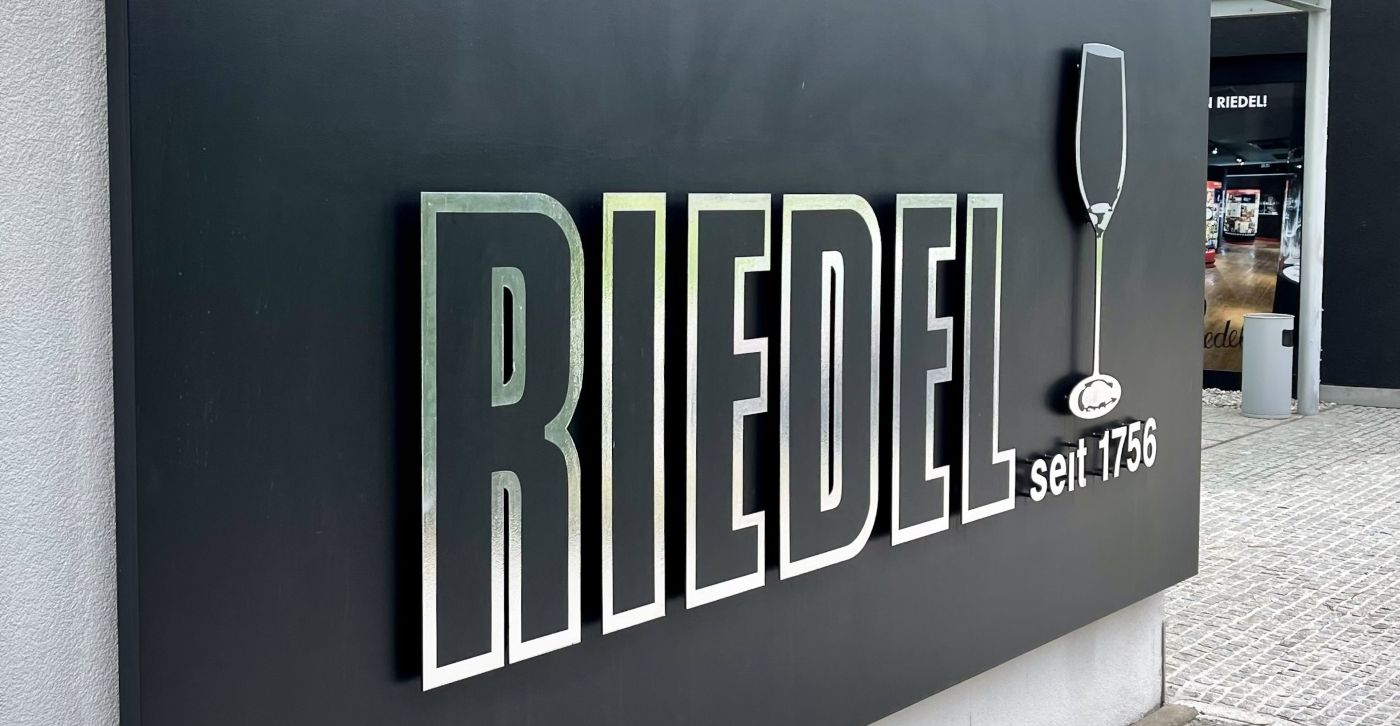
While reading a hard-copy newspaper recently, I noticed a front-page advertisement wrap that caught my eye. No, it wasn’t the seemingly frequent Harvey Norman one, which often covers the newspaper; rather, it was an advertisement for Riedel wine glasses. To be upfront, I’m not looking to buy high-end crystal stemware, nor would I ever have given a second thought to such an ad, but I found a single line in the text quite fascinating. While it is not wise to believe everything marketed to consumers, the advertisement stated that Riedel is an 11th-generation family company.
For those interested, the business was founded in Bohemia (now the Czech Republic) in 1756 by Johann Leopold Riedel. It survived World War II and was essentially re-founded in Kufstein, Austria, in 1956; in 1973, it invented the grape-specific wine glass that the rest of the industry has copied ever since. Today it is run by the 11th-generation Maximilian Riedel, with his father, Georg, still involved in the business.
It got me thinking. Firstly, this company has been around longer than when Captain Cook sailed to these shores, but also, how does a company survive eleven handovers from one generation to the next, each one an opportunity for things to go wrong? What other companies have managed this feat, which have fallen over along the way, and more importantly for investors, what separates the two groups?
There is a very well-known saying when it comes to family businesses: the first generation builds it, the second maintains it, and the third generation destroys it. The most-quoted statistic on the topic comes from a 1980s study by Professor John Ward of 200 family-owned manufacturing businesses in the US state of Illinois between 1924 and 1984. Roughly 30% of family firms make it to the second generation, 13% to the third, and a mere 3% to the fourth generation and beyond.

With this data, there are a few big caveats with significant selection (and survivorship) bias: it is single-geography, single-industry, single-era focused, and a family that sells a thriving business at a good price is counted as a ‘failure’. Nonetheless, the general direction of travel can probably be relied upon to a certain degree. Any company which makes it through to generation #5 would be in rarefied air.
On the topic of longevity, Japan is always near the top of that list across many facets. Think of the Blue Zones around the world (specific regions where an exceptionally high number of people live to the age of 100), and the island of Okinawa in Japan is on that list. When it comes to companies, a Bank of Korea study identified 5,586 companies worldwide that were more than 200 years old, and 56% of them were Japanese. Germany was a distant second (side note – data in Europe is more fragmented without a quality ‘clean cohort’ of data).

The most famous of the Japanese ‘shinise’ (long-established companies) was Kongō Gumi, a temple builder founded in 578 AD and run by 40 generations of the Kongō family. It is widely regarded as the world’s oldest continuously operating company. Interestingly, bloodline was never the deciding factor in who would lead the company. The family routinely adopted the most capable son-in-law, who took the Kongō name and the keys to the business. What finally ended a 1,400-year run in 2006 was not a lack of heirs; it was ~¥4 billion of debt and competition from large construction companies as concrete replaced timber. The business now lives on as a subsidiary of Japanese listed company Takamatsu Construction Group (TYO: 1762).
It would probably come as no surprise that most of the world’s oldest family companies are privately held, rather than being publicly listed. Something I learnt when putting this article together is that there is an association called The Hénokiens, which is open only to companies more than 200 years old in which the founding family still owns more than half the capital. There are 56 members of this association and stating what may be obvious, none of them are Australian.

That said, a handful of genuinely multi-generational businesses have managed to combine family control with a stock exchange listing:
Australia is a young country, so, on a relative basis, we need to lower the bar when compared to global peers. Starting with Washington H. Soul Pattinson & Co Ltd (ASX: SOL). Caleb Soul opened a pharmacy on Pitt Street in 1872, Lewy Pattinson opened his in Balmain in 1886, and the merged business listed on the Sydney Stock Exchange on 21 January 1903 at £1/share. SOL's global distinction is its status as a Dividend Aristocrat. It has paid a dividend every year since listing and has increased that dividend for 27 consecutive years.
Away from the ASX, South Australia appears to be the main source of longevity when it comes to generational companies in Australia. The list includes:
Other notable examples, such as Fairfax, remained in family ownership for 146 years until 1990, whilst McWilliam’s Wines, founded in 1877 and run by six generations, entered administration in January 2020.
Looking across the survivors and the failures, four things stand out to us:
In a time when equity markets are increasingly focused on the here and now, being able to focus on a longer-term investment horizon can be seen as a competitive advantage. At NAOS, one of our investment principles is to look at companies through at least a 5-year investment horizon. In some respects, companies are similar to humans; they are living and breathing entities, and growth can be years in the making rather than through overnight success.
In looking at these generational companies, what we do find useful is that the behaviours of companies that have survived 150 years look remarkably like the attributes we look for in an emerging company today, including:
Credit Suisse had a long-running ‘Family 1000’ research paper which found that family-controlled listed companies outperformed the broader market by ~370bps p.a. from 2006-2020. In addition, these companies were far more likely to reduce net debt than their peers. Limited research on such companies (again noting significant survivorship bias) suggests these attributes have historically produced outperformance.

“If we think long term, we can accomplish things that we couldn’t otherwise accomplish.” Jeff Bezos, Founder, Amazon.com Inc (NDQ: AMZN)
Join our investment community. Be the first to receive NAOS News, Podcasts, Insights and Invitations.
By subscribing, you consent to NAOS using your personal information in accordance with its Privacy Policy, a copy of which is available here.


Join our investment community. Be the first to receive NAOS News, Insights and Invitations.